

Table of Contents
Last Updated On – 07-07-2026
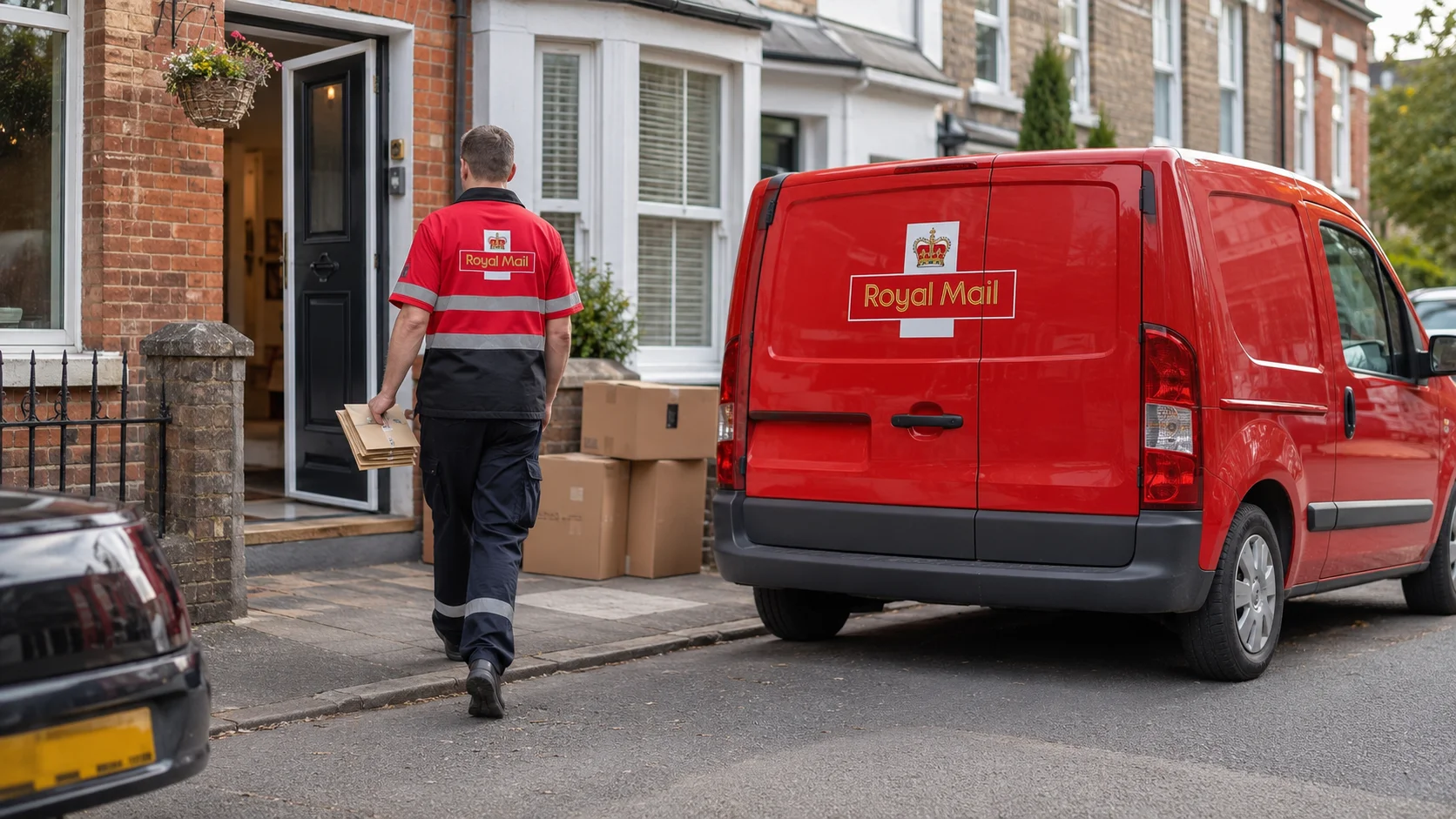
The Royal Mail Redirection Service helps people and businesses forward post from an old address to a new address after moving.
According to the official Royal Mail Redirection page, personal mail can be redirected to a UK or overseas address for 3, 6 or 12 months, with prices starting from £45.00.
Royal Mail also states that redirected mail is processed as Second Class and that there are no fees for anyone under 16.
The service is useful because it gives households and businesses time to update their address with banks, HMRC, DVLA, councils, insurers, utility providers, employers, customers and other important contacts.
In simple terms, Royal Mail Redirection acts as a temporary safety net. It helps reduce the chance of important letters being missed or delivered to a previous address.
Royal Mail Redirection Service: Key Facts at a Glance
| Key Point | Current Guidance |
| Main purpose | Redirects post from an old address to a new UK or overseas address |
| Available for | Personal and business customers |
| Personal redirection periods | 3 months, 6 months or 12 months |
| Starting personal price | From £45.00 |
| Under-16s | No fee payable |
| Mail class | Redirected mail is processed as Second Class |
| Setup timing | Royal Mail says customers should apply as soon as possible because at least five working days are needed |
| Best time to apply | Royal Mail’s moving-home support guidance says applying three weeks before moving is best |
| Concession prices | Available for eligible personal customers receiving Universal Credit or Pension Credit |
| Business redirection | Separate service for businesses moving premises |
| Sensitive redirection | Royal Mail has a dedicated route for people moving because of domestic abuse |
How the Royal Mail Redirection Service Works?

The service is designed for people or organisations moving from one address to another. Once set up, Royal Mail identifies mail addressed to the named people or business at the old address and redirects it to the new address.
Royal Mail describes the service as suitable for people moving home in the UK or abroad, whether the move is permanent or temporary. It is also available for business customers.
The Basic Process
- The applicant chooses the redirection period: 3, 6 or 12 months.
- The applicant provides the old address, new address and names of people whose mail should be redirected.
- Royal Mail verifies identity and address details.
- Once approved and active, mail addressed to the named person or business at the old address is forwarded to the new address.
- Before expiry, the redirection can usually be renewed if more time is needed.
The Post Office mail redirection page says applicants usually need the names and dates of birth of all people whose post is being redirected, the old and new addresses, postcodes and a suitable payment card.
How Much Does Royal Mail Redirection Cost?
Royal Mail’s page states that personal redirection starts from £45.00. Post Office guidance lists the following individual personal redirection prices for UK and international addresses. These prices were checked on 6 July 2026 and may change.
Personal Redirection to a UK Address
| Duration | Lead Applicant | Extra Person |
| Up to 3 months | £45.00 | £11.00 |
| Up to 6 months | £66.50 | £12.50 |
| Up to 12 months | £95.00 | £13.50 |
Personal Redirection to an International Address
| Duration | Lead Applicant | Extra Person |
| Up to 3 months | £168.00 | £31.50 |
| Up to 6 months | £238.50 | £35.00 |
| Up to 12 months | £341.50 | £37.50 |
Post Office guidance states that these individual fees are exempt from VAT.
Royal Mail Concession Redirection: Who May Pay Less?
Royal Mail offers lower personal redirection prices for eligible customers receiving Universal Credit or Pension Credit.
Royal Mail’s concession page also lists several benefits under its Universal Credit wording, including Child Tax Credit, Housing Benefit, Income Support, income-based Jobseeker’s Allowance, income-related Employment and Support Allowance, and Working Tax Credit.
Eligibility should not be assumed. Royal Mail says applicants must be able to provide proof of benefit dated within the last six months and must be moving to another UK address. The concession price is not available for redirection to an overseas address.
Example Concession Prices
| Household Example | 3 Months | 6 Months | 12 Months |
| Single adult household | £24.50 | £32.00 | £64.00 |
| Household with 2 adults | £32.00 | £32.00 | £64.00 |
| Family household with 2 adults and 2 children under 16 | £32.00 | £32.00 | £64.00 |
| Family household with 3 adults | £32.00 | £32.00 | £64.00 |
Royal Mail also states that no fee is payable for anyone under 16 and that redirections are VAT exempt.
When Should Someone Set Up Royal Mail Redirection?
Royal Mail’s moving-home support hub says applicants should apply as soon as possible because Royal Mail needs at least five working days to arrange a redirection. It also says it is best to apply three weeks before moving.
Post Office guidance says an application can be made up to six months before moving and up to six months after moving, although extra security questions may be asked if someone applies after the move.
Practical Example
A tenant moving on 30 September should ideally apply in early September once the new address is confirmed. That gives Royal Mail time to process the request, complete checks and reduce the risk of important letters arriving at the old address during the first weeks after moving.
Why the Royal Mail Redirection Service Matters?
Moving home can create a gap between leaving an old address and updating every organisation that holds the old details. During that gap, important letters may still arrive at the previous property.
That matters because post can include:
- Bank and credit card statements
- HMRC letters
- Council tax documents
- Mortgage or rent correspondence
- Insurance documents
- NHS or medical appointment letters
- Pension, payroll or employer letters
- School, university or professional documents
- Legal, tribunal or court-related correspondence
Royal Mail highlights that redirection can help customers avoid missing important documents and reduce the risk of identity fraud.
Redirection Is Not a Replacement for Changing Address
The Royal Mail Redirection Service is best understood as a safety net, not a permanent address update. Households and businesses should still update their address directly with important organisations.
For example, GOV.UK says people can use HMRC’s service to update address details for Child Benefit, Income Tax, National Insurance and State Pension, and that HMRC normally requires the person to wait until they have moved before telling HMRC the new address.
DVLA guidance says drivers must update their driving licence, V5C log book, Direct Debit for vehicle tax and other details when they move home.
GOV.UK also says people need to register again to update their name, address or nationality on the electoral register.
What Documents Are Needed to Apply?

Royal Mail says identity checks are needed to set up a redirection securely. For postal applications, Royal Mail states that applicants need two forms of identification showing the address they are moving from.
Proof of Identity Examples
Royal Mail lists examples such as:
- Passport
- Driving licence
- Credit or debit card
- Bank or building society book
- Birth certificate for under-16s
- EU member state identity card
Proof of Old Address Examples
Royal Mail lists examples such as:
- Original utility bill
- Original credit card statement
- Original mortgage statement
- Original bank or building society statement or passbook
Royal Mail says proof of old address must usually be no older than six months and must match the last name and old address.
How to Apply for Royal Mail Redirection?
There are several application routes, depending on the circumstances.
Apply Online
For many personal customers, the quickest route is to apply through Royal Mail’s online Redirection service. Royal Mail’s page includes an option to set up a redirection and get a quote.
Apply by Post
Royal Mail allows postal applications using its Redirection application form. The completed form, identity documents and payment by cheque can be sent to Royal Mail’s Redirection address.
Apply at a Post Office Branch
Royal Mail says applicants can also apply at a Post Office branch and should take the appropriate identity documents. Post Office guidance also explains that branches can help with mail redirection applications.
Apply for Someone Else
Royal Mail says someone may apply on behalf of a person who has died or for someone for whom they have Power of Attorney, using the Special Circumstances process.
Domestic Abuse and Sensitive Redirection
Royal Mail gives specific instructions for people moving because of domestic abuse. It says they should call 03457 777 888, tell the customer service agent they require a Sensitive Redirection, and should not apply online or at the Post Office.
This is an important safety point. In sensitive circumstances, readers should follow Royal Mail’s dedicated process rather than using the standard public application route.
Royal Mail Redirection for Businesses
Business redirection is separate from personal redirection. Royal Mail says a Business Redirection is suitable when the whole business is moving and the business is not located in a multi-occupancy building.
If only part of a business is moving, or the business is in a multi-occupancy building, Royal Mail says Business Diversion may be more appropriate.
Business Redirection Prices
Royal Mail lists Business Redirection prices per trading name as follows:
| Destination | Up to 3 Months | Up to 6 Months | Up to 1 Year |
| UK address | £299.00 | £439.50 | £707.50 |
| Overseas address | £349.50 | £536.50 | £906.50 |
Royal Mail notes that the table shows the price per business name and that abbreviations of trading names are free where they relate to the same trading name. UK Business Redirection is VAT exempt, while overseas pricing is zero-rated for VAT.
Practical Moving Checklist: What to Do Alongside Redirection?
A redirection is most useful when combined with direct address updates. A practical moving checklist may include:
- Set up Royal Mail Redirection once the moving date and new address are confirmed.
- Update HMRC after moving, where relevant.
- Update DVLA records for driving licence, vehicle log book and vehicle tax details.
- Register again on the electoral register with the new address.
- Notify banks, credit card providers, lenders and pension providers.
- Update insurers, including car, home, life, pet and travel insurance providers.
- Update employers, payroll teams, schools, universities and professional bodies.
- Notify GP surgery, dentist, optician and other healthcare providers where relevant.
- Update online shopping accounts, subscriptions and delivery addresses.
- Check post arriving through redirection and use it as a prompt to update missed senders.
Official GOV.UK guidance should be used for address updates involving HMRC, DVLA and electoral registration.
Final Takeaway
The Royal Mail Redirection Service is a practical safeguard for UK households and businesses moving address.
It helps keep important letters moving while address records are being updated, and it can reduce the risk of sensitive post being left at an old property.
The key points are simple: apply early, allow at least five working days, choose 3, 6 or 12 months, check whether concession prices apply, and continue updating organisations directly.
For most readers, redirection should be treated as a temporary protection layer during a move, not a substitute for changing address with important senders.
For the most accurate current prices and eligibility rules, readers should check Royal Mail’s official Redirection page before applying.
FAQs About Royal Mail Redirection Service
How much does Royal Mail Redirection cost in the UK?
For personal UK redirection, Post Office guidance lists £45.00 for up to 3 months, £66.50 for up to 6 months and £95.00 for up to 12 months for the lead applicant. Extra-person fees apply for adults and children under 16 are free.
Is Royal Mail Redirection free?
It is not generally free. However, Royal Mail says no fee is payable for anyone aged under 16, and concession prices are available for eligible customers receiving Universal Credit or Pension Credit.
Who qualifies for Royal Mail concession redirection?
Royal Mail says the concessionary offering is for personal customers receiving Universal Credit or Pension Credit, subject to proof and UK address requirements.
How long does Royal Mail Redirection take to set up?
Royal Mail’s moving-home support guidance says at least five working days are needed, and applying around three weeks before moving is best.
Can someone apply after moving house?
Yes. Post Office guidance says a person can apply up to six months after moving, although extra security questions may be asked.
Can Royal Mail redirect mail overseas?
Yes. Royal Mail says personal mail can be redirected to any UK or overseas address for 3, 6 or 12 months. Overseas redirection costs more than UK redirection.
Does redirected mail arrive as First Class?
Royal Mail says redirected mail is processed as Second Class.
Can businesses use Royal Mail Redirection?
Yes. Royal Mail offers Business Redirection when the whole business is moving. A separate Business Diversion service may be more suitable if only part of the business is moving or the business is in a multi-occupancy building.
Does Royal Mail Redirection stop identity fraud?
It cannot guarantee fraud prevention. However, Royal Mail says redirection can help reduce the risk of personal details falling into the wrong hands. Sensitive documents should still be protected by updating addresses directly with banks, government departments and other senders.
Important Note:
Editorial Note: This article has been reviewed against official Royal Mail and Post Office guidance. Last reviewed: 6 July 2026.
Disclaimer: This guide is for general information only. Prices, eligibility rules and service conditions can change, so readers should check Royal Mail’s official Redirection page before applying. This article does not provide legal, financial, tax or security advice.